I’ll be honest what I am about to do makes little sense. As a person who has been given numerous books of writing advice over the years and disliked nearly all of them, it makes little sense for me to try and offer some advice about writing. I am also unpublished so why on Earth should you listen to me?
The reason I am putting this out into the world is because:
1) I have been in a rut with my writing for some time and thinking about it led me to the conclusion that
2) so many of my problems come from bad or confusing writing advice. Which is why I would like to try and publicly address this issue and possibly save someone else from this burden or give them a boost.

I have a ten year old daughter. About two years ago she started writing stories for fun. It’s been amazing to watch this process because aside from two attempts I’ve made at writing stories for her (which did not go over well) she knows her father writes and that is the extent of our relationship regarding writing.
Which is to say she writes at school and gets advice from her teachers and I am a Dad who compliments her work and tells her she’s great. She loves to write and she loves to share the stories when she is finished. Being a part of this process has given me an interesting view of watching someone learn to love writing. It is wonderful to watch and but has also made me aware of how little pleasure I get from writing most days.
Regarding my writing, I mention it but rarely go into specifics. My focus is primarily fiction. When I started I wrote short stories and then shifted to novels. I’ve always found essay writing to be easy and enjoyable and I believe this is why I often discounted it as ‘proper’ writing. So while trying to do ‘serious’ writing I would write essays and critiques and I also have several ideas for comic books I’ve been tinkers with four about twenty-five years.

In 2005 I was gifted a video camera which prompted a foray into writing screenplays (only so many random clips can be shot before you question what you are doing). In 2006 I launched an online magazine called The Dogwood Journal – which I ran on my own. At that point, most of my writing was correspondence with contributors as I had to design and maintain the website (in addition to creating the promotional materials to find contributors) and had absolutely no idea what I was doing.
I closed the magazine in 2008 and shifted to primarily writing screenplays in the hope of getting an agent and selling them.
Until 2012 I was unfocused, finishing little of what I worked on. I tended to go back and forth between projects, either when the mood struck me or when I ran out of ideas. This brief timeline I think illustrates (but leaves out so much) my often changing direction with writing.
When my main writing interest is short or long form fiction (or essays) I never feel I need advice. For better or worse when people would give me books like Stephen King’s, “On Writing”, I dutifully skim through and eventually tuck it onto a bookshelf to be forgotten. When friends would tell me about famous writers and their writing habits (Naked! Standing! Drunk!) I never find helpful (but often amusing).
I say this because after a certain point, 2004 or so, I had been writing on my own long enough to know what my habits were and what worked for me. It’s wonderful that some people can only work in the evening but it has little to do with how I write.

I always felt a bit guilty about the books. Clearly Stephen King is on to something when it comes to writing and given that in 2020 I still haven’t published anything (with pay) there is a voice in the back of my head saying, “maybe you should reopen the book”. What I have found in my many skims of how-to books about writing are a lot of conversations I would like to have but little in the way of instruction. Perhaps I have just read the wrong pages.
Whatever the reason my prose writing has largely been unaffected by the advice and rules of others. I feel a sense of freedom facing the blank page and I certainly never feel tied to any particular rules when I write. If I decide to put a weird symbol in-between my paragraphs to indicate something, so be it – who can stop me? (And what does it matter?)
*
Where the problems arose for me and the reason why I think anyone will find this interesting, is when I started writing screenplays. At the time, 2005 or so, most of what I found on the Internet was not terribly helpful. Software was necessary to adhere to the MANY formatting rules and attempting to write without proper software was dismissed by everyone as foolishness.
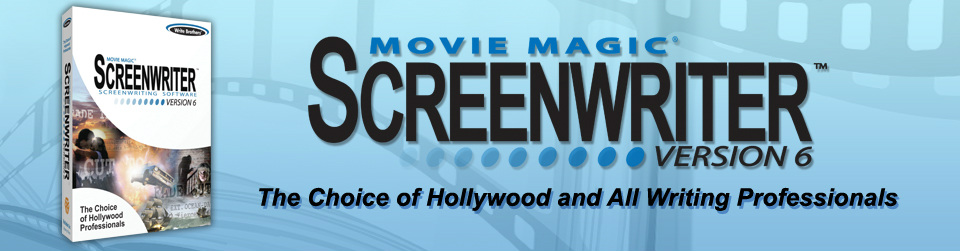
There were two brands I knew of and one was too expensive, so I bought the one I could afford. Then I bought several books and read them in their entirety. Some were books just about formatting and others like, “Screenplay” by Syd Field were books held in such high esteem that any searches about formatting brought up testimonials about how important the book is. I read all the books I bought and learned a fair bit from many.
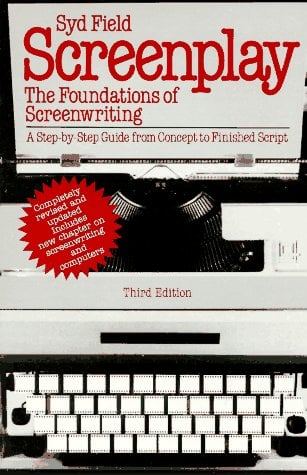
Unfortunately I also learned a lot of nonsense along the way. What so many people drill into the aspiring screenwriter (and I have no doubt they are correct) are the limitations you need to impose on your writing. The idea being that what you are writing is not designed to stand on its own. What you are writing is a blueprint that needs to be sold, then interpreted and executed, then visually edited and possibly released as a movie.
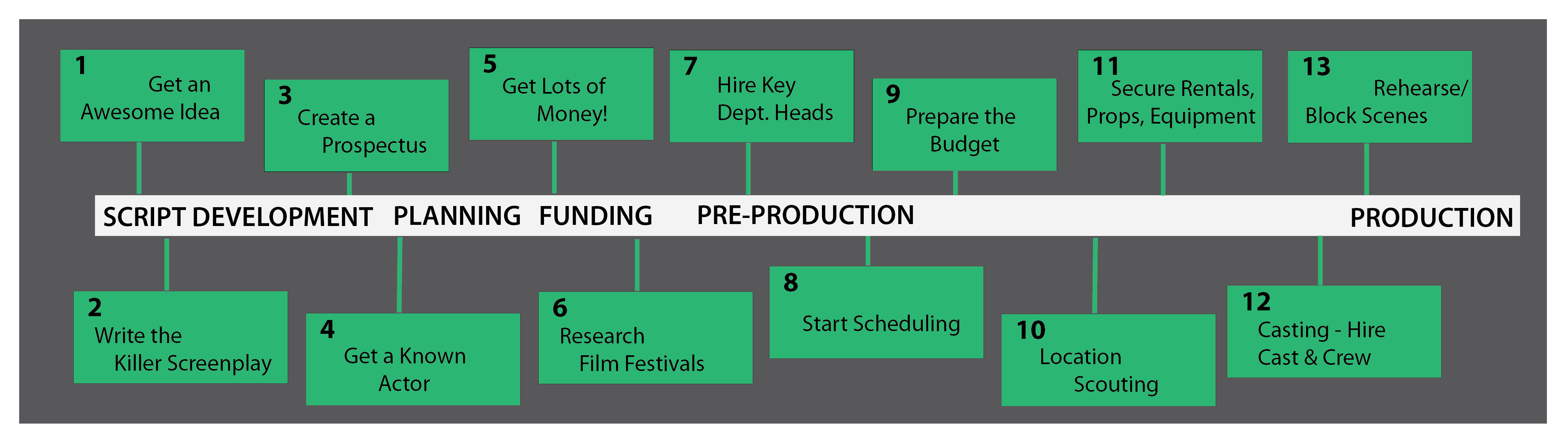
To me, this is a bizarre way to approach writing. Mind you this advice is largely aimed at those looking to sell their screenplays to others. If you are interested in writing a screenplay to direct yourself, something with little to no budget, the advice actually becomes more restrictive. People tell you to write around what you have. If you have an apartment you can shoot in, write your screenplay in an apartment. If you have a purple sweater…you get the point.

What I’ve found since I started writing screenplays is
1) the writing is no longer fun and
2) my imagination is stifled.
To address the first point. My least favorite thing about writing a screenplay is the formatting. After fifteen years I still don’t know all of the shortcuts for the software (I now use the expensive one) and I often have to stop writing to figure out how to make the program place the text where I want it.
I don’t know how to format everything perfectly in the WordPress editor (especially since it changed since the last time I posted) but – I can cheat and do what I like. That is not possible with screenwriting software. So quite a bit of time is spent figuring out how to have overlapping dialogue, or what have you, and the flow of my writing is continually interrupted but this technical aspect.
The “instructions” for what a screenplay have to be also contribute to this lack of enjoyment. Depending on who you read the rules mostly state that there should not be a lot of text on the page. Your descriptions should be sparse. It is hard to interpret how much you should actually write and each book I have read offers their own take on how to get around the problem of describing a scene. I have come to a system of sorts over the years but I dislike it. It takes as long as it takes to describe a person or an emotion or the way an apartment looks. If that puts my page count at 142 I could really care less (and I know that is incorrect for writing a screenplay).
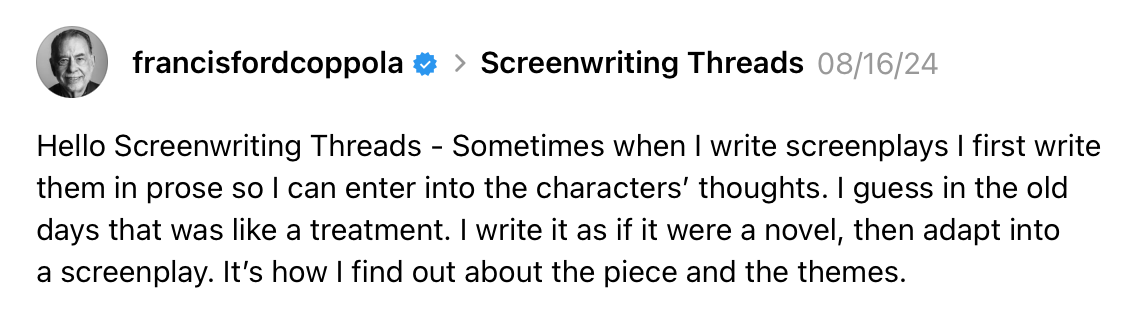
My second point has to do with a stifled imagination. When people tell you, “write what you know” that doesn’t mean unless you an astronaut you can’t set a story in space. They are telling you that if your main interest is family dynamics then you should write something like Lost in Space and keep the focus on how this family navigates these crazy situations in outer space. I feel like this is a big one because I spent years limiting what I would attempt because what did I know about…anything?
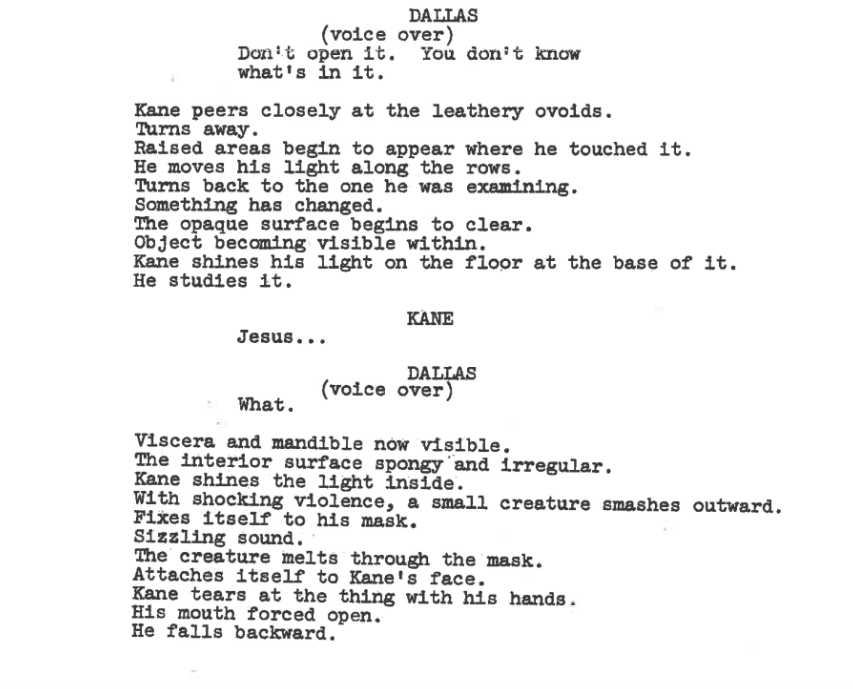
What I have found is that the numerous bits of advice: “use what you have” “keep your budget low” “write for the edit” “think of how this will present itself visually” have created mental clutter and roadblocks that keep me from writing what interests me.
When I’m writing I am not thinking in an analytical sense. I am in the moment, responding to things intuitively. Even if I have an idea of what it is I want to say or have the characters do it changes based on what feels right. Things are immediate and emotional and governed by my gut and what it thinks I should do. If that intimate scene between two people suddenly veers into a musical number on a distant planet – so be it. That’s how writing should be (for me at least). Maybe when I come back to edit I will feel that what I have done is terrible or out of place. I might paste it into another document to rework it into another project. Or it just might be the first sign that what I have been writing is not working for me and I need to go in an entirely new direction.

So the big take away from all of this for me, of seeing the glee that fills my daughter when she writes – is go with the glee. I think it’s great that Hollywood and everyone else has rules in place about formatting and brads and color-coded pages to help with actually making a movie. None of that matters when it comes to the actual writing.
If it has not been made clear with what I have already written most of these practical matters will be sorted out in the rewriting and editing and other later stages. That’s what those moments and processes are for. The actual writing is about being in the moment and doing what feels right – not being concerned with the bottom line or page count or whether this character has something to do in the scene.
I have no idea if these ramblings are at all helpful to anyone else, I hope they are but I can see how they only really help me. If I have anything to offer about advice it is that I know most of it is meant to be helpful. You are not under any obligation to use any of it unless it actually helps you.


 The Writings of John Ryan Sullivan
Leave a comment