
(This post contains massive spoilers)
I’ve decided to dive into writing about the world of Dune, mostly because I’ve been reading the books and watching the films for several years. I know my wife is sick of hearing my thoughts about anything Dune related and trying to collect my thoughts regarding part two has left me feeling incomplete. It’s not a bad movie but when compared to part one I can’t call it a good one either.
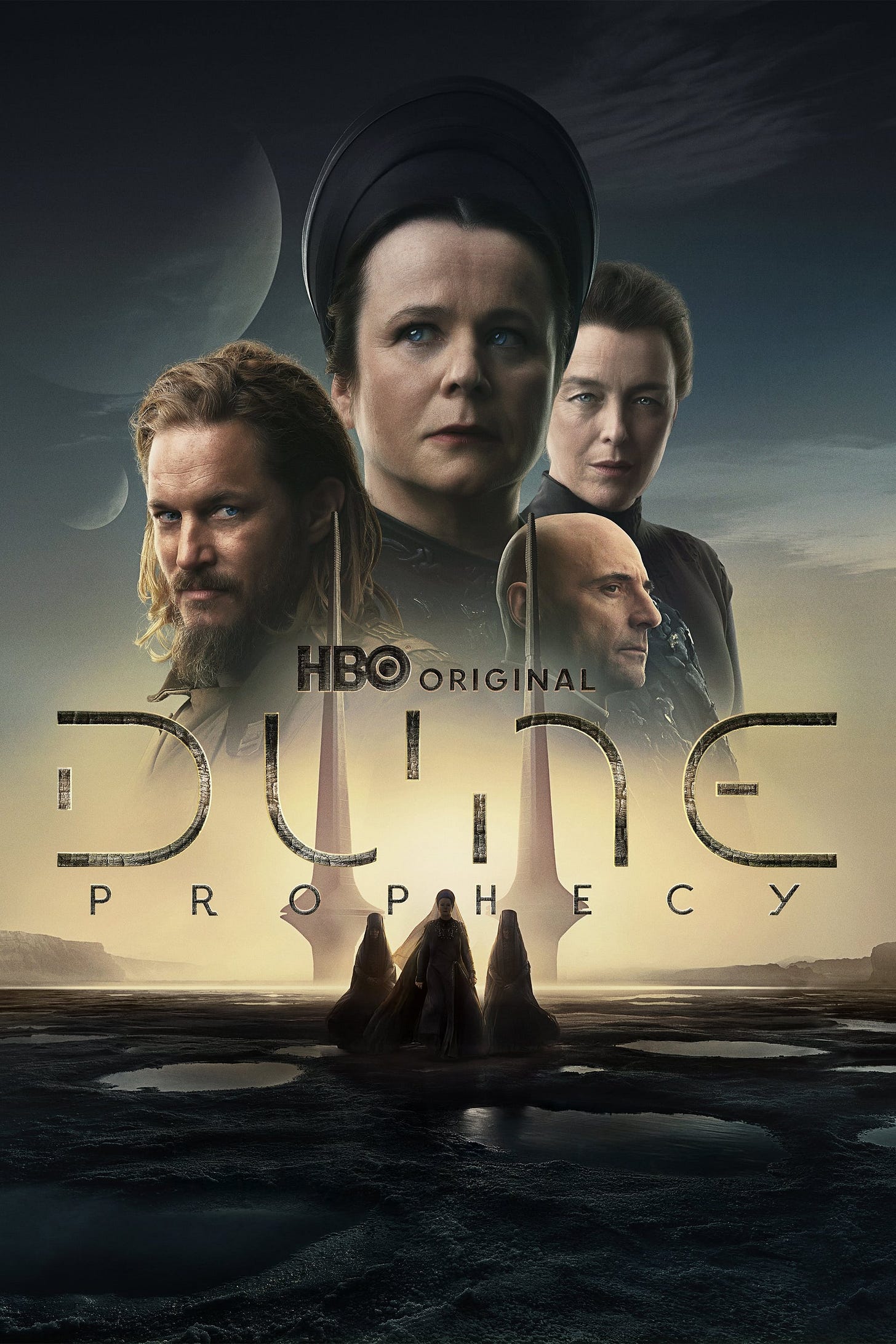
Which brings us to the latest offering, Dune: Prophecy. Which I feel you could add the subtitle to: Am I missing something?
This show suffers from a common symptom of contemporary television – lofty ambitions with strange omissions and (I believe) financial constraints. Which needn’t be a bad thing, so many inventive and creative ideas spring from restraints. Only I found when watching this show there reaches a point where either there wasn’t enough time or energy to pursue these alternative, creative ideas and the storytelling suffered.

Which is a shame because the actors in Dune: Prophecy are some of my favorites. Emma Watson, Olivia Williams and Mark Strong are such tremendous talents that when I saw the trailer for this show I entertained the notion that it might exceed the films. This is not mentioning Travis Fimmel who almost single-handedly made Vikings the spectacle it was (and certainly made Raised by Wolves more interesting than it should have been).

I’m starting this in a terribly negative fashion, which is not how I like to operate. So allow me to focus on the good things.
The story being told, the beginnings of the Bene Gesserit and more importantly the discovery of Voice, is interesting. At no point in watching did I find myself distracted or wanting to skip ahead. Emma Watson is commanding and powerful as Valya Harkonnen. I’ve never seen her play a role like this before, manipulative and vindictive but not evil (not quite at least) and powerful.
The way information is doled out in the show is clever and keeps the viewer off-balance. Anyone familiar with the world of Dune knows the name Harkonnen and what it implies, which is I believe is why it isn’t immediately supplied. When it is given the viewer is offered hope that perhaps these Harkonnen might not be like those other ones.
Because we don’t just have one important Harkonnen character to follow, we have Olivia Williams playing Tula Harkonnen, Valya’s younger sister. Which is incredibly interesting given that both are reverend mothers of the Bene Gesserit and that Valya is mother superior.

As someone who has read the books Frank Hebert wrote (but not the works his son completed or wrote on his own – including the source material for this show, Sisterhood of Dune) I’ve spent some time with other reverend mothers but the dynamic of actual sisters being in charge of the entire organization is intriguing to watch. Especially because the Bene Gesserit are at their beginnings here, still navigating their purpose and methods to improve humanity.
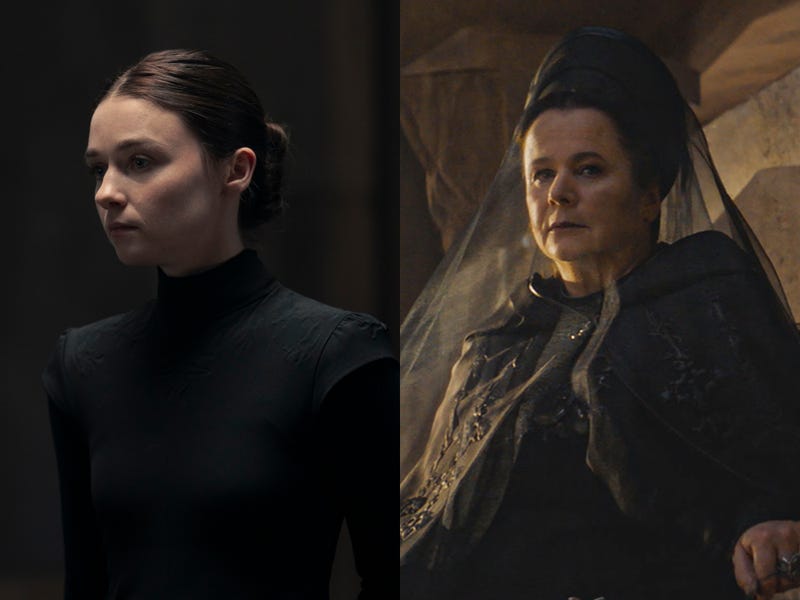
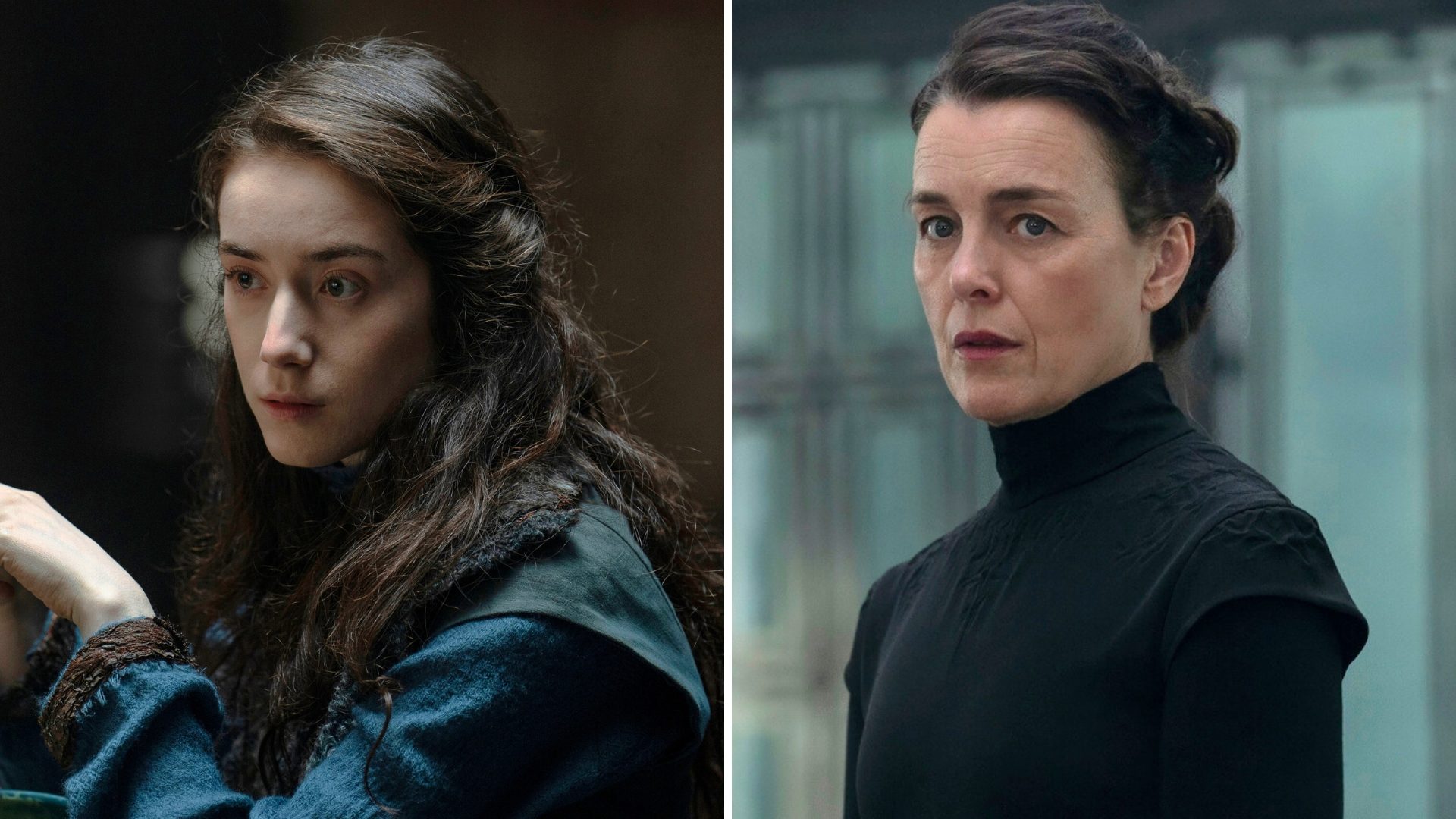
The sister’s stories are intercut with what we come to find out are younger versions of themselves. The younger actors playing the sisters, Jessica Barden (Valya) and Emma Canning (Tula) provide interesting contrasts to the older versions of their characters. So much of the information given to the viewer, seeing the storylines of the younger and older, is well done and interesting. I found myself taken by the changes that were apparent in the characters, how clearly the events of the past shaped and molded these women into who they become. Which is, obviously, the point of telling the story in this manner. I wish to point out that I think this is done exceedingly well and I found myself surprised and moved with the events as they happened.

The problem with their stories is that by the end of the show either not enough changes or the shifts are not interesting enough to be fulfilling. At a certain point, episode five I think, the viewer gets the sense that this is all there is and I know I certainly felt disappointment that there isn’t more complexity and depth to the story being told.
Which, I think, is a personal issue I have with the works of Dune. There’s a vast amount of material and storytelling that takes place and I find with the books and films I find myself hoping that there will be a satisfying conclusion after following these characters around. Each time, with this show or Dune Part two or even most of the books, I have felt unfulfilled because what actually happened? Oh, Paul went south and played along with the religious prophecy the Bene Gesserit put in place. If this wasn’t an intergalactic space story about religion, ecology and natural resources it would be the narrative equivalent of “rich kid stops rebelling and follows path Mommy laid out for him”. Which, personally, I don’t want to watch.

So I’ve omitted writing about several of the central characters and their importance to the plot and their character arcs and everything else. The reason for this is, most of them really aren’t that important. Most certainly have little to no development and their actions are largely plot devices that move the Bene Gesserit storyline forward.
It’s an odd complaint to make about a show – that it knows who the central characters are – but in this case the Harkonnen sisters are clearly the center. Which then makes everyone else secondary to their storyline. Ordinarily I would cheer at this and happily watch. Only the result with Dune: Prophecy is all of these wonderful actors play characters who have little depth or purpose.

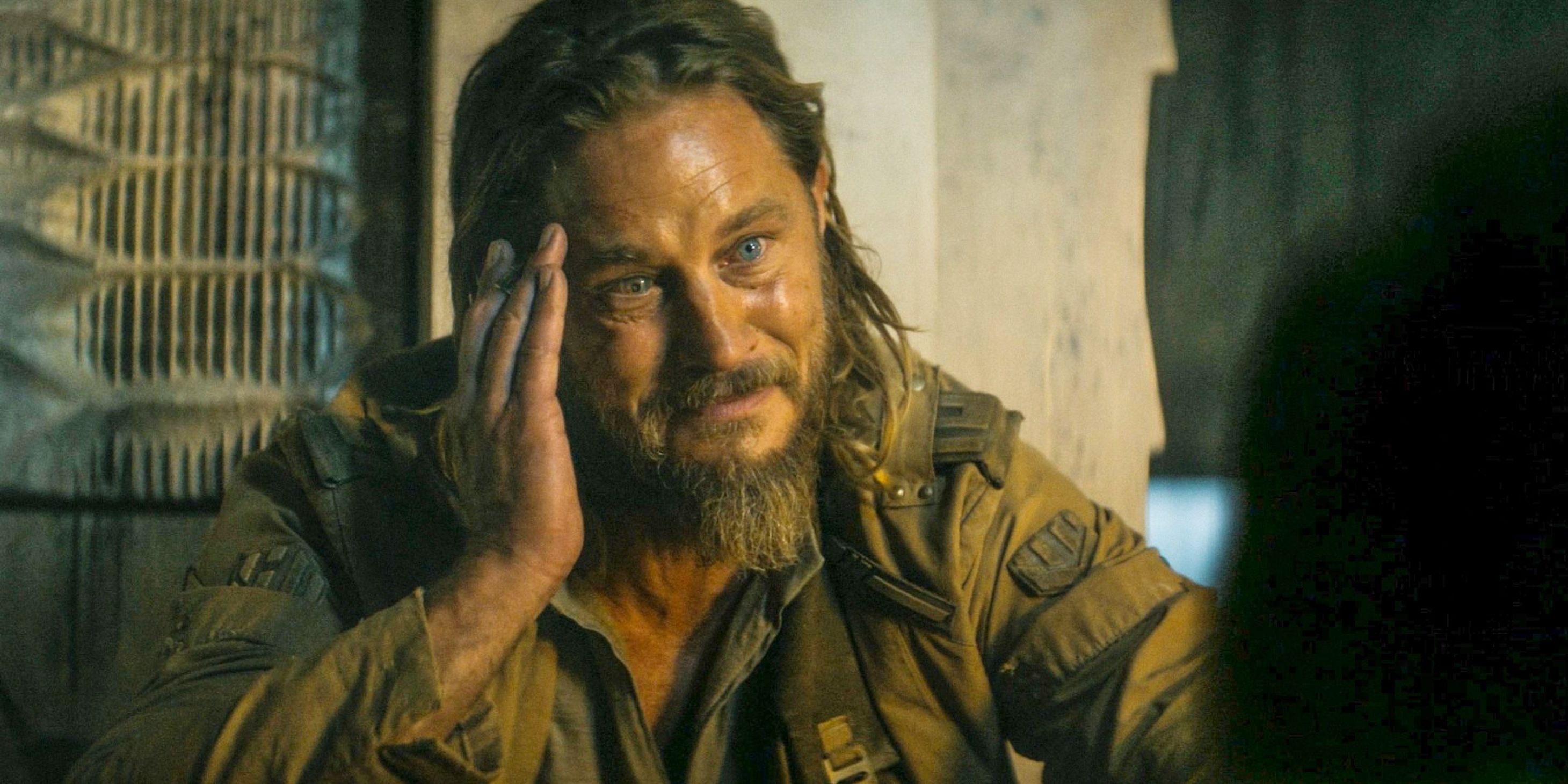
The roles become archetypes, the weak emperor being led by his stronger wife and advisors. The rebellious daughter, unknowingly being manipulated by the traitorous sword master but both of them actually loving one another. The mysterious solider, loyal but dangerous and harboring a secret. It’s not that these components are bad, it’s as though we were making a dough with them and didn’t mix long enough. They didn’t combine to make something wonderful and complex that we could then bake and serve with our main course (storyline – I’m done with metaphors, forgive me).
In closing I feel less than great writing this post as I’ve only watched the show once and I can’t help but feel I’m being unfair. Origin stories are difficult, especially since most of us have been watching so many of them in the past fifteen years. There are only so many ways to show how people became who they are without falling into tropes and patterns that feel stale.
I think Dune: Prophecy does a good job with the Harkonnen sisters and how they came to be. It’s in developing the supporting characters and giving them richness and life where the show falls short. Which is an absolute shame because these actors could have done much more and created a deep and rewarding show.


 The Writings of John Ryan Sullivan
Leave a comment